Part Two: Rugs’ Shape
The shape of your rug, unlike its size, is mostly dictated by two things: the room you're working with and the vibe you're trying to achieve.
Rectangular is the obvious choice, but it should be a considered one rather than a reflex. “Function” (see Part 1 on Rugs’ Sizes for more context) do usually occur in an elongated from, which makes rectangular making sense. Most rooms are rectangular themselves, and working with that geometry allows a satisfying visual rhythm. The market offers plenty of options here, with good flexibility on proportions and ratios.
The runner is the rectangular rug's natural offspring. In long, narrow spaces like hallways, it's a convenient answer that makes sense. If you have to compromise on dimensions of rugs on the market, go shorter rather than wider. As discussed in Part 1 of this guide on Proportion, too little breathing room between the rug and the wall (think 10cm per side or less) will make the space feel suffocating.
Square is a less obvious but entirely valid option. It works best when you want a formal, grounded feeling, or when you need to anchor a defined area within a very large room.
A round rug under a round dining table creates a satisfying visual logic that's hard to argue with. Beyond that, round rugs are excellent for softening boxy rooms and introducing a sense of playfulness and flow, which is why the work so well in children's spaces. They can also work beautifully in a sitting room, even smaller than the couch feet area, if you want to throw my advice on sizing out the window, and put the spotlight firmly on your coffee table. Just make sure whatever's on it is worth the attention: think art or an important center piece.
One of my favourite uses is placing a round rug partially under a piece of furniture. I like how it extends the furniture's visual influence and makes the whole space feel more inviting and alive.
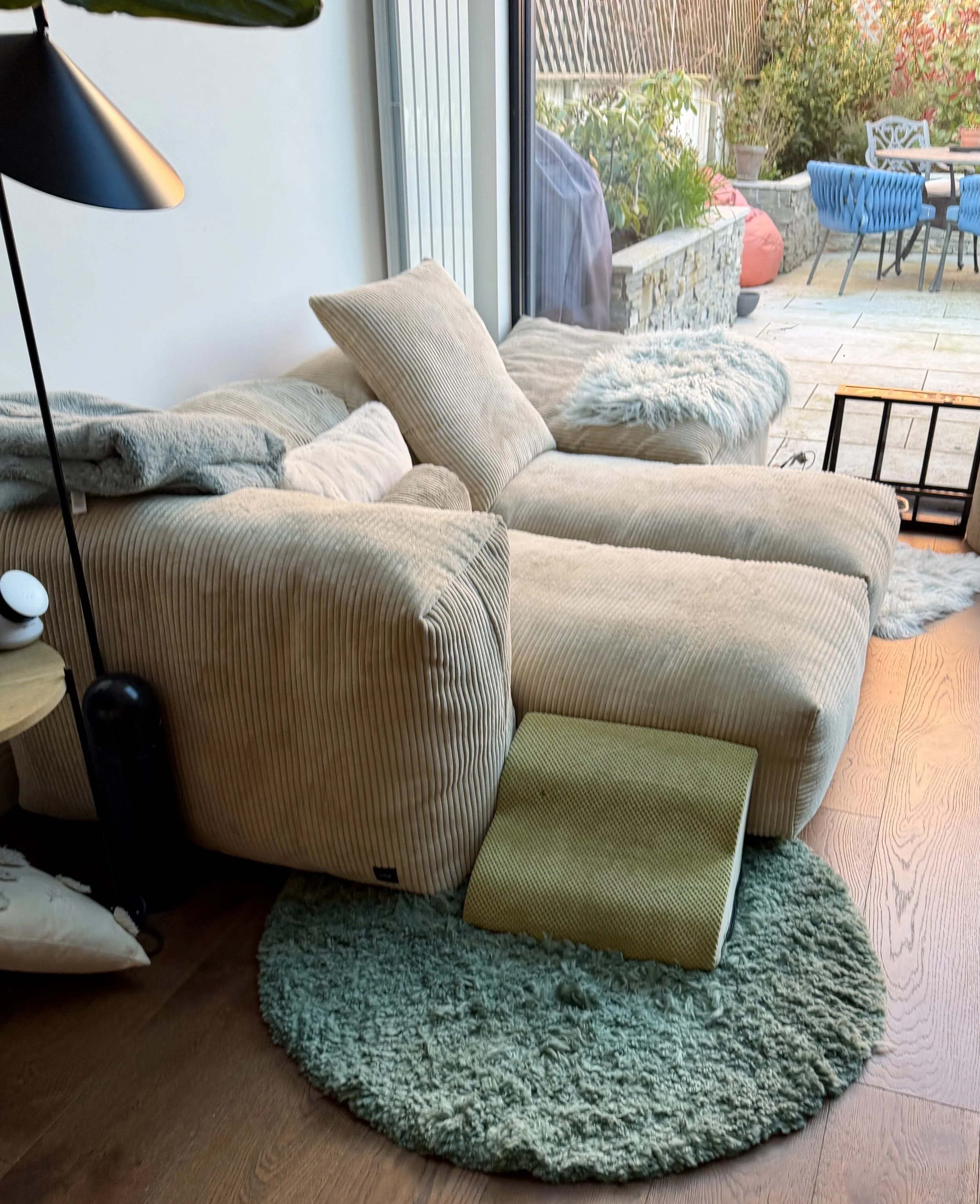
In this project, the rug is the first entry point to the couch, making it more anchored and connected to the space.
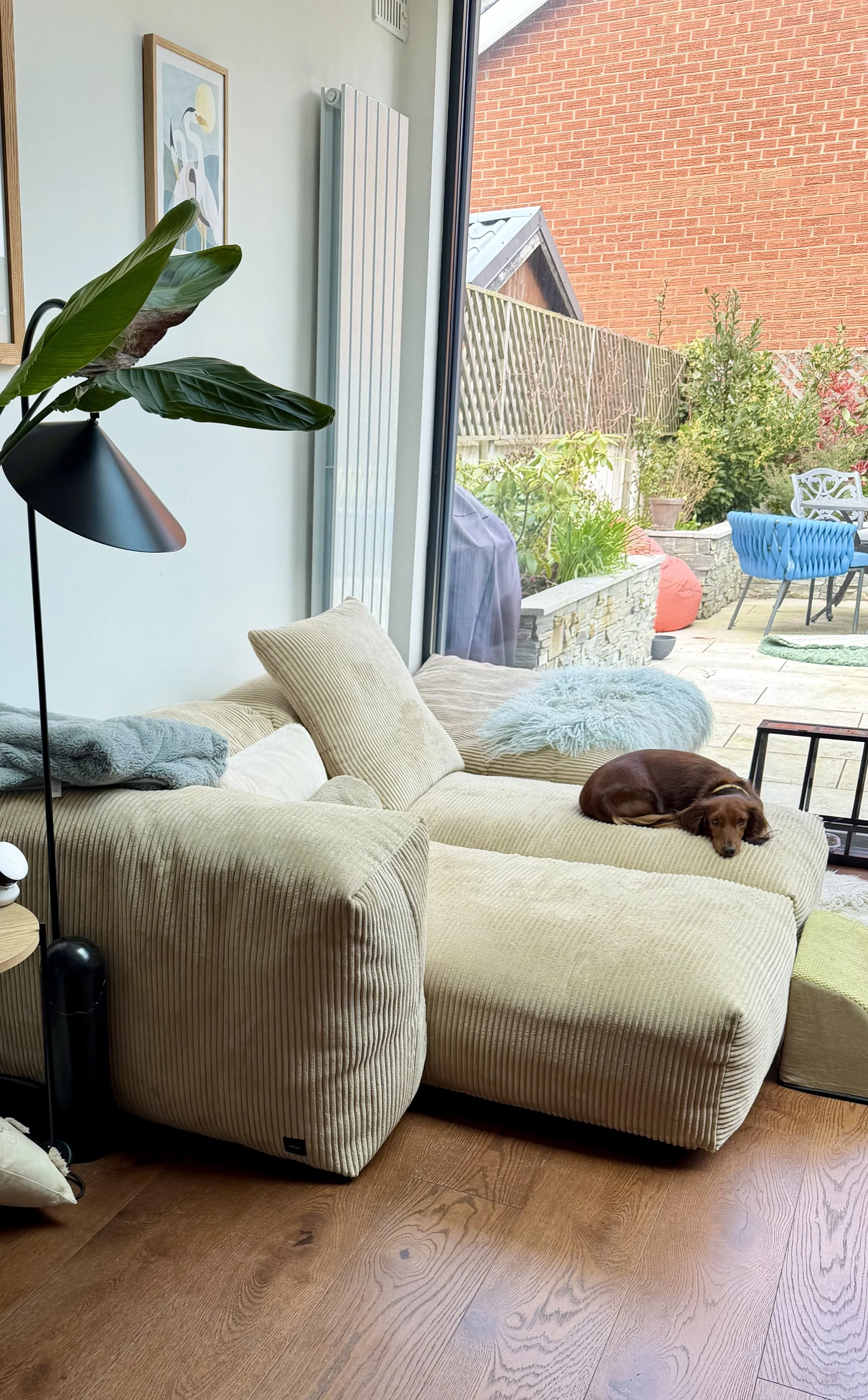
Same project, the couch feels less connected overall to the surrounding space, despite Ivy, the dog, helping making the space more welcoming
Oval rugs… I'm still making up my mind. They offer an obvious crossover between the flow of a round rug and the practicality of a rectangular one, but in the wrong space they can tip into feeling dated. My ideal applications is to use them for a bathroom, front of a beautiful freestanding bathtub; as a bedroom rug in a country house, or anchoring a large (very large, in order for you to appreciate and take in in one sight the edges of the) sitting room with a modern sofa that has rounded and sculptural lines.
Organic and irregular shapes are a personal favourite. They work in contemporary and classic spaces alike, adding a modern twist without disrupting the overall aesthetic. In rooms with strong geometric architecture, an irregular shape can be a wonderful counterpoint. If you're drawn to these, you probably already have an educated eye for design so trust it and enjoy the ride.
A couple of things worth keeping in mind though: some of these pieces are timeless, some are trend-driven. The timeless ones, much like a great mid-century vintage find, will look cool indefinitely. The trend-driven ones may start to feel tired in a few seasons, so choose with that in mind. Also, many organic rugs tend to run small: if you go this route, consider layering to avoid the “coaster” effect on your floor.
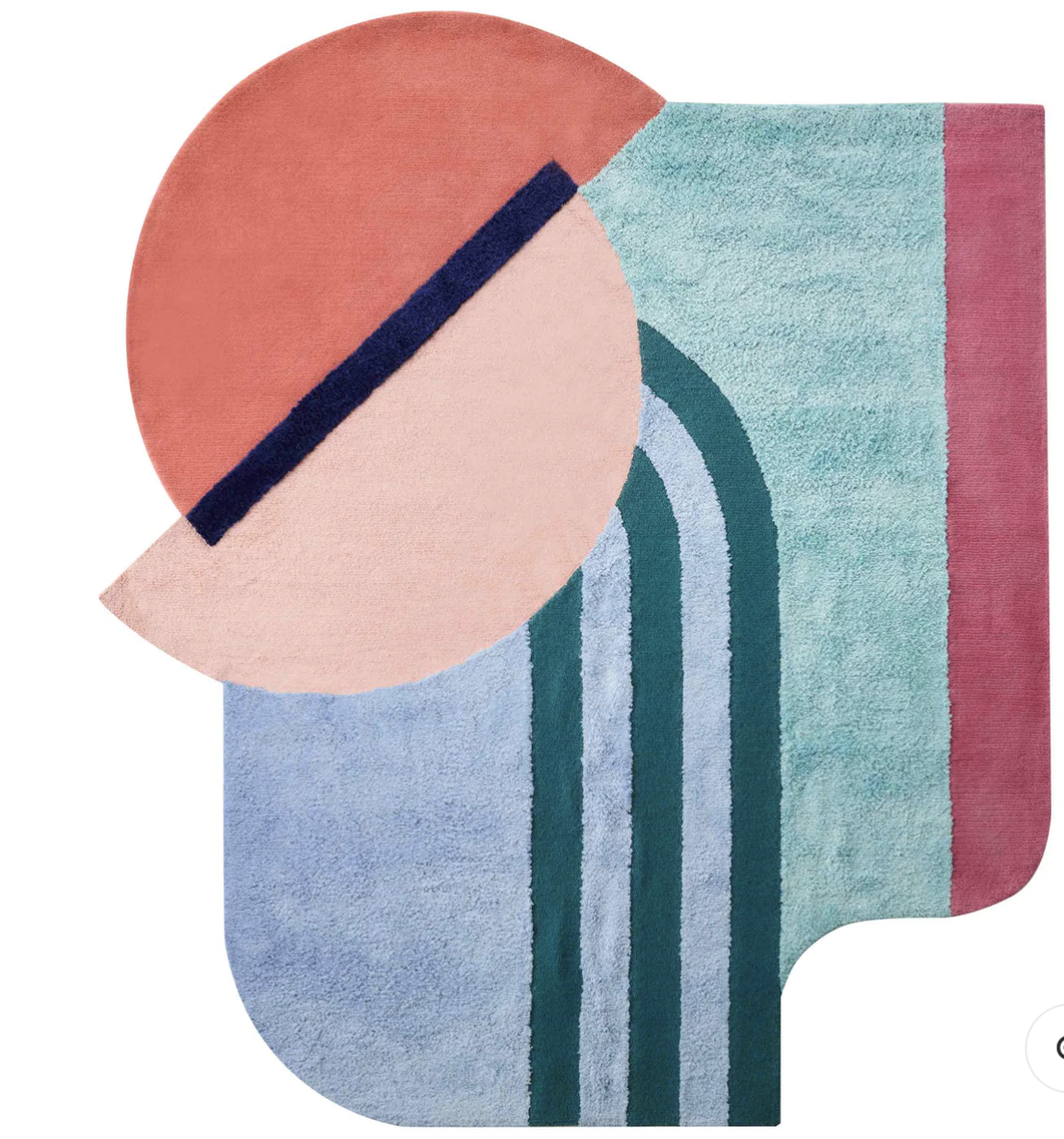
Like, hello, are you kidding me…what is this marvel? From - and photo credits - Studio The Blue Boy @ https://studio-theblueboy.com/
Happy designing.
Sofia — Crocaii Studio, Spaces worth savouring