The Rug Guide — Part One: Size & Proportion
As I said recently on Instagram, the most common note I give as an interior designer is this: this room needs a rug.
A rug anchors furniture, absorbs sound, and gives your brain an immediate read of what a space is for and how it works. There is a particular kind of discomfort that comes from walking into a room with no rug; a different kind, honestly just as bad, from seeing the wrong one in place.
These are guidelines to help you make your space feel better. If you get stuck, reach out. Let's dive in.
This is the first part of mini guide that covers: Size & Proportion · Shape · Material & Texture · Design, Colour & Line · Layering
01 — Size & Proportion
I start here because it is the least subjective aspect of rug selection — the easiest to get right once you know the basics — and yet it is consistently gotten wrong, at every level of experience.
Start with function, not measurements. The rug should be large enough to frame whatever is happening in that part of the room. That framing is what tells your brain immediately where to settle and what to expect. It is, genuinely, one of the most soothing things a room can do.
The most common mistake is going too small. A rug that floats disconnected from the furniture around it makes a room feel ‘lost’ and, often, smaller than it actually is. If you are aiming for something luxurious and comfortable, a small rug works directly against you.
Before you look at any piece, ask: what needs to sit on this rug, and how will this area be used? The size follows from that answer.
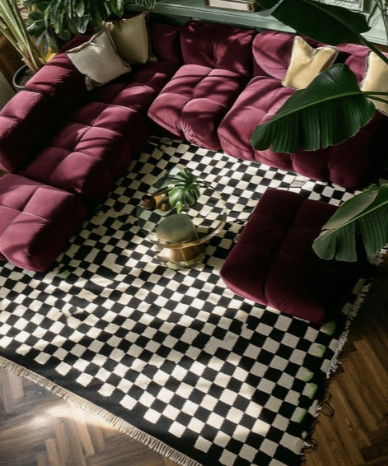
Area rug in a sitting room, source below
SITTING ROOM
This is a social space, so the socialising pieces belong on the rug.
At minimum, the front feet of the sofa and the whole coffee table should sit fully on it.
Ideally, any armchairs intended for conversation are on it too: this is what pulls a seating group into a single zone rather than a loose collection of furniture.
A reading chair tucked beside a bookshelf can sit off the rug entirely: its function is different.
DINING ROOM
Function here is eating. A rug the same size as the table — essentially a projection of the table onto the floor — is just a nuisance underfoot when you try to use the chairs.
All chair legs should remain on the rug when pulled in at the table, with 20–30 cm of extra space between chair and rug edge.
What you want to avoid is chair feet catching on the border every time someone sits down or stands up. In an ideal world, chairs would stay on the rug even when pulled out for sitting, but in most Irish homes, that would require a size that becomes impractical for the surrounding space.
Honest warning: dining rugs take a beating. Food drops, wine spills, and the rug you loved at purchase can quickly become a source of ongoing stress. Choose your material — short pile, flatweave — with that reality in mind, or accept the risk upfront.
BEDROOM
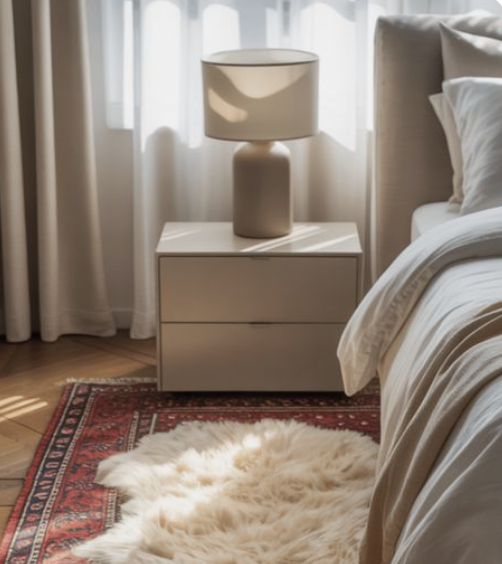
Layered rug with bed side table, source below
In Italy, when I was growing up, we used to have ‘scendi letto’, a doormat-sized rugs placed just beside the bed. The instinct is right (cold feet on a winter morning are nobody's idea of a gentle start), but the scale is all wrong.
The rug should extend far enough around the bed that you step onto something warm every morning. A border of at least 50–60 cm on the sides and foot of the bed is the minimum worth having. Ideally, your bedside tables sit within the width of the rug, though in most standard bedrooms, the overall size that requires can be hard to manage, and it is not a rule worth breaking the bank for.
BATHROOM
Practicality leads here. You are likely covering three zones — in front of the bath or shower, at the sink, and at the WC — which may overlap depending on the size of the room. One well-chosen mat can do all three. The single non-negotiable: it must be washable. Bathroom rugs collect more than you want to think about. (And close the lid before you flush — always.)
ENTRANCE & HALL
For these spaces, two separate pieces work better than one: a rug for the entrance and a runner for the hall.
An entrance rug does something very helpful to keep mess and dirt at bay: it communicates to your brain, without a word, where the outside world stops. Dirty shoes, wet umbrellas, the general chaos of coming through the door: the rug marks the boundary. It is probably the first thing worth buying when you move into a new place. Make it large enough that you can move around the entrance within it, and ideally your coat hanging area sits within that same zone.
Runners are made for hallways. A hall's function is simply to move you from A to B: no furniture needs to anchor to the rug, and nothing should. The moment a hall rug starts accommodating a console table and chairs, it starts feeling like a waiting room.
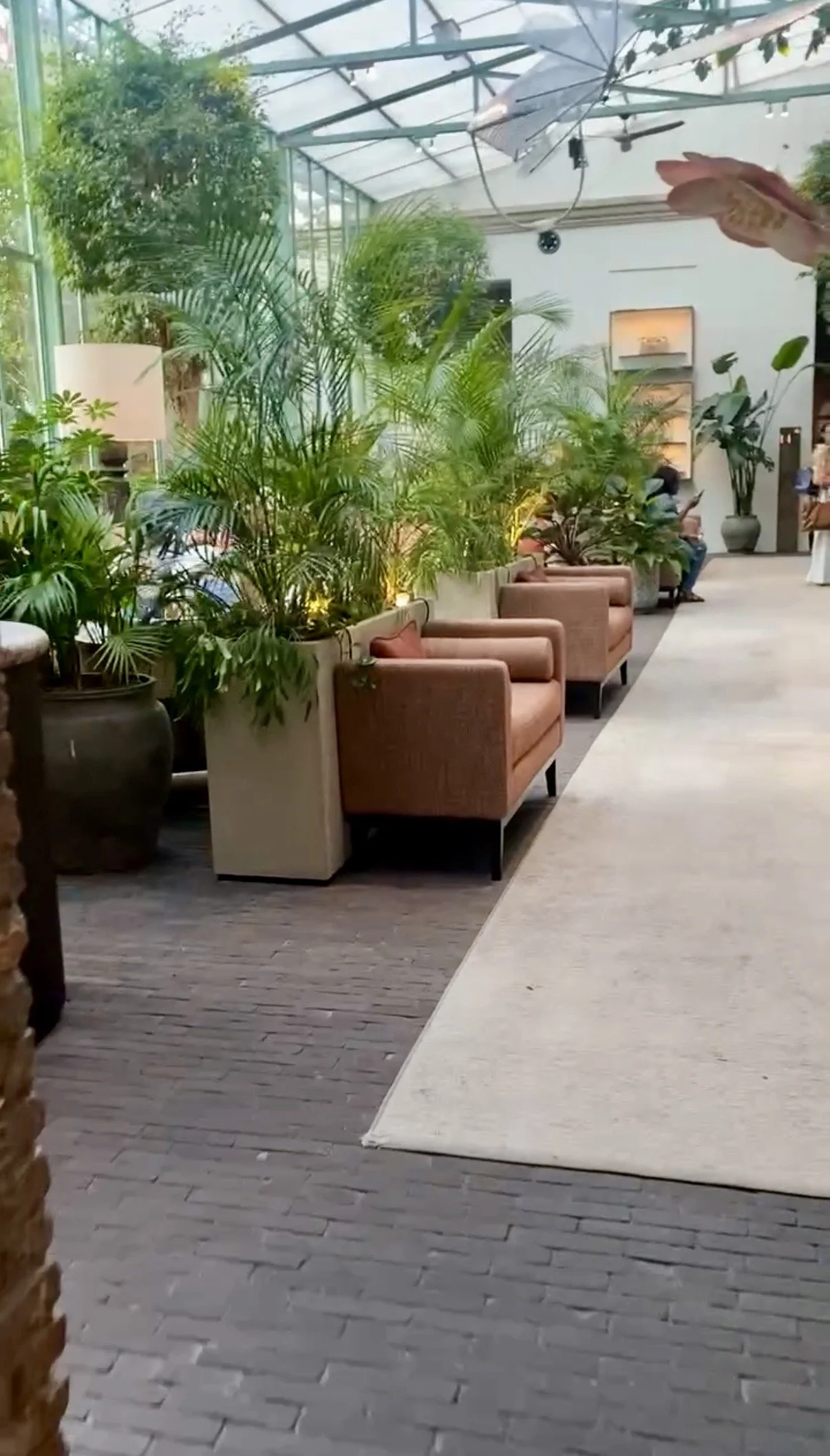
I love how here the function of the rug at reception suggests only small stays in the seating area (feet off the runner) at Botanic in Antwerpen.
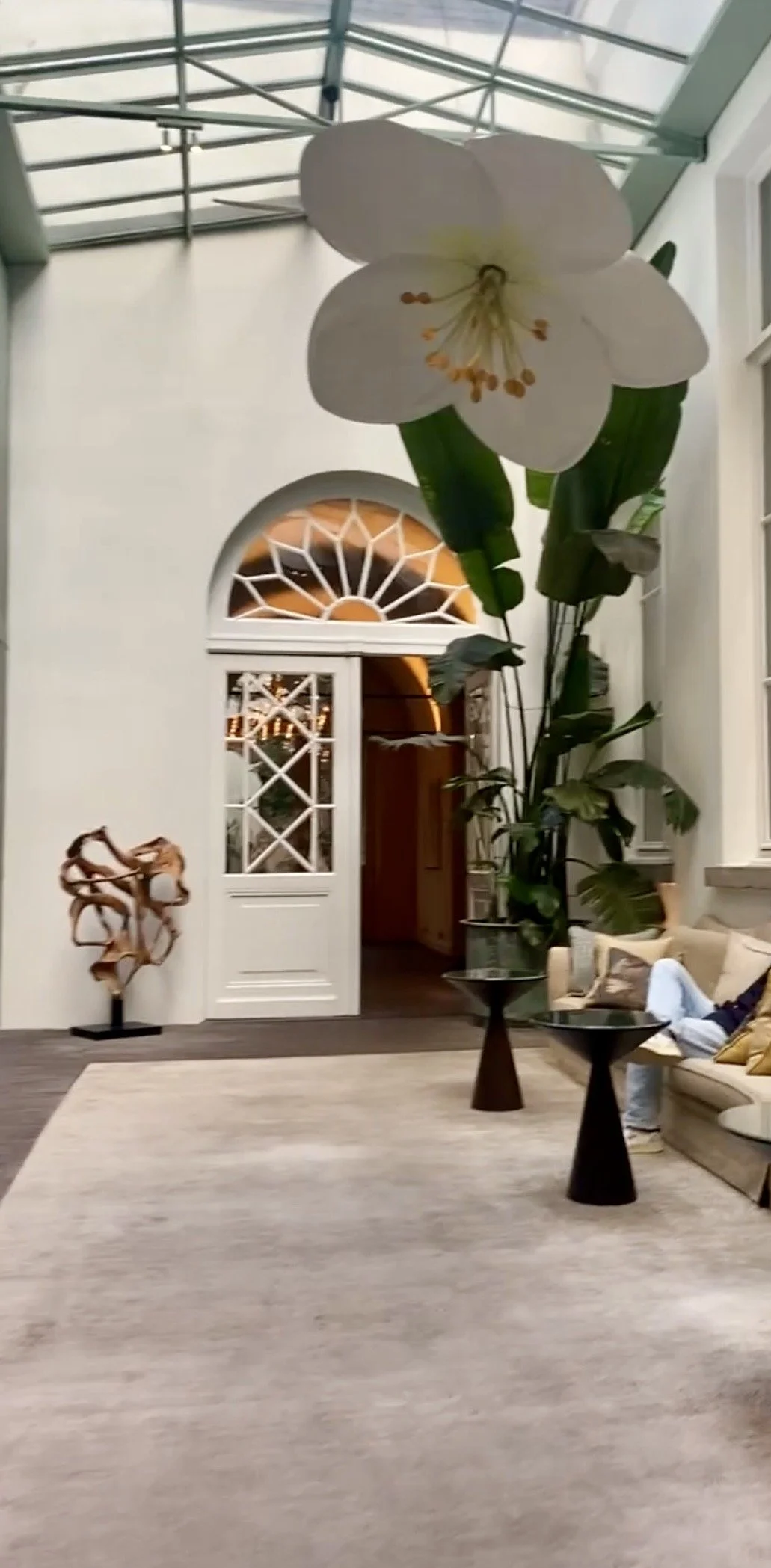
It is striking the comparison with the other waiting area just before reception, which is actually designed for people to wait - eg. taxi etc. Also at Botanic.
ON PROPORTION
Everything above points in one direction: when in doubt, go larger. But there is a limit worth noting. A rug that extends well beyond the zone it defines stops defining it. You want floor to remain visible around the edges, framing the rug the way a mount frames a print. The moment a rug fills the room edge to edge, you have a carpet. The bare perimeter is part of the composition, the walking space between areas allows comfort of use, it is not leftover space.
These are guidelines, not laws. Knowing the baseline is what allows you to break a rule deliberately, rather than by accident.
Sofia — Crocaii Studio,Spaces worth savouring
For examples of rugs, good and not ideal, and source of the images: https://ph.pinterest.com/SofiaScattoCrocaiiStudio/rug-guide/